Inclusion#
Z-Wave inclusion is the process of adding a new device (node) to an existing Z-Wave network. During inclusion, the new node is added to the network by assigning it a unique Node ID and the network's Home ID. This process ensures the device can communicate with other nodes and the controller within the network.
Inclusion Methods#
Classic Inclusion#
This is the original method where both the controller and the node to be included must be within direct radio range. It requires manual interaction as both the controller and the end device needs to enter Learn Mode.
Network-Wide Inclusion (NWI)#
NWI allows nodes to be included even if they are not within direct range of the primary controller. Always Listening (AL) nodes forward explorer frames, enabling inclusion requests to reach the controller through the network.
SmartStart Inclusion#
SmartStart radically simplifies the installation by using QR code scans for uniform, trouble-free setup. The device will automatically join the network when powered on, without user interaction at the time of inclusion. In the background, SmartStart inclusion uses the same mechanisms as NWI, allowing the controller to include nodes that are outside its direct range.
SmartStart Inclusion Procedure#
SmartStart Inclusion with S2 security is the preferred method for Z-Wave Plus V2, including all Long Range devices, which is why it was selected as the focus of this performance evaluation. The following UML flowchart illustrates the sequence of steps involved in the SmartStart inclusion process.
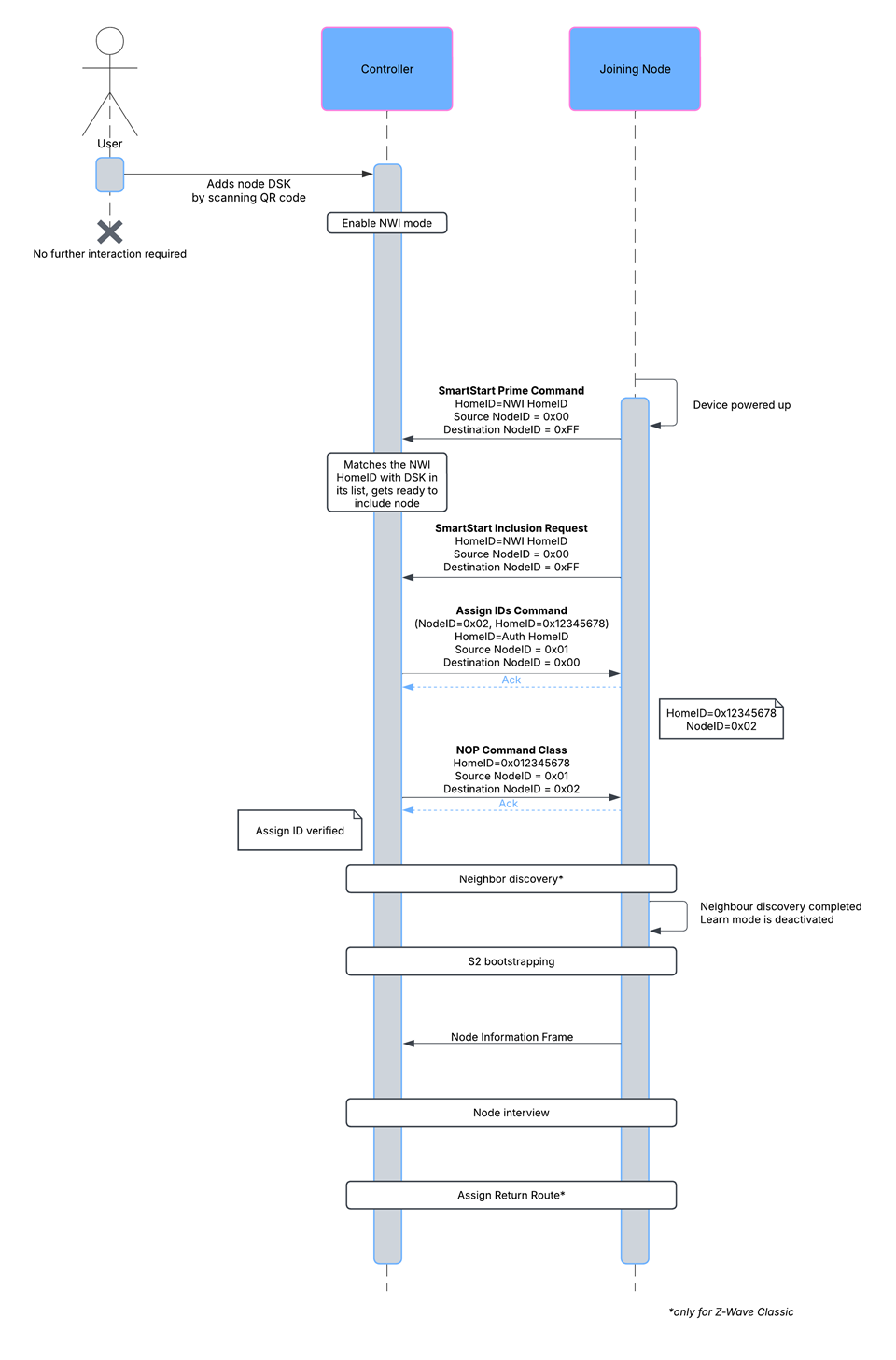
Before installation, the user must register the Device Specific Key (DSK) with the controller, typically by scanning the QR code provided with the product. Once this step is completed, no further user interaction is required. When the joining node powers up, it automatically begins sending SmartStart Prime commands, signaling its intent to join the network. For Z-Wave Classic, the SmartStart Prime command is transmitted as an Explorer Frame, which is propagated through the network by AL nodes operating in NWI mode. The controller matches the Home ID with its DSK list and prepares for inclusion, which is triggered by a SmartStart Inclusion Request sent by the joining node four seconds after the SmartStart Prime. The controller then assigns a unique Node ID to the joining node using an Assign ID command. This assignment is verified when the joining node acknowledges a NOP command sent by the controller to its newly assigned Node ID. In the case of classic Z-Wave devices, the process continues with neighbor discovery. During this phase, the controller polls which nodes are within direct wireless range of the joining node. This information is used to build a network map and determine optimal communication routes within the network. The next step is the S2 bootstrapping to establish secure communication. After the secure channel is established, the joining node sends a Node Information Frame (NIF), which includes its network and application capabilities. Based on the NIF, the controller performs a device-specific interview process, querying the supported Command Classes of the device. Finally, for classic Z-Wave, the joining node is notified how to reach the controller through the Assign Return Route commands.
This process is practically the same for routed inclusion; further details can be found in the Z-Wave and Z-Wave Long Range Network Layer Specification.
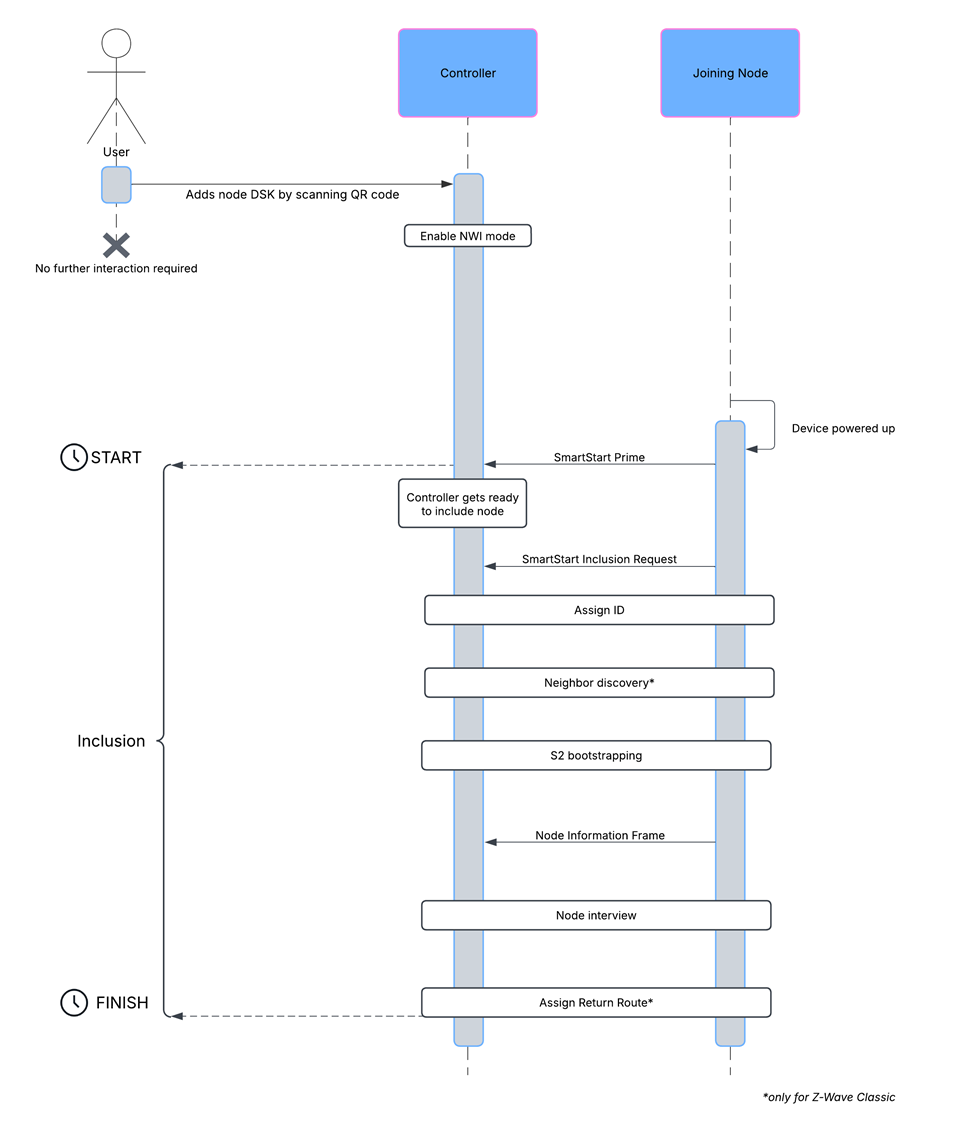
Based on the flow described above, the inclusion time in this evaluation is defined as the duration between the reception of the SmartStart Prime command and the completion of the Assign SUC Return Route step.
Measurement Results#
Measurement setup | Details |
|---|---|
Environment | |
DUT (hardware) | EFR32ZG28 |
Application (software) | Z-Wave Binary Switch example |
SDK version | SiSDK 2025.6.0 |
Iterations | 100 SmartStart inclusions |
Measured metric(s) | SmartStart inclusion time |
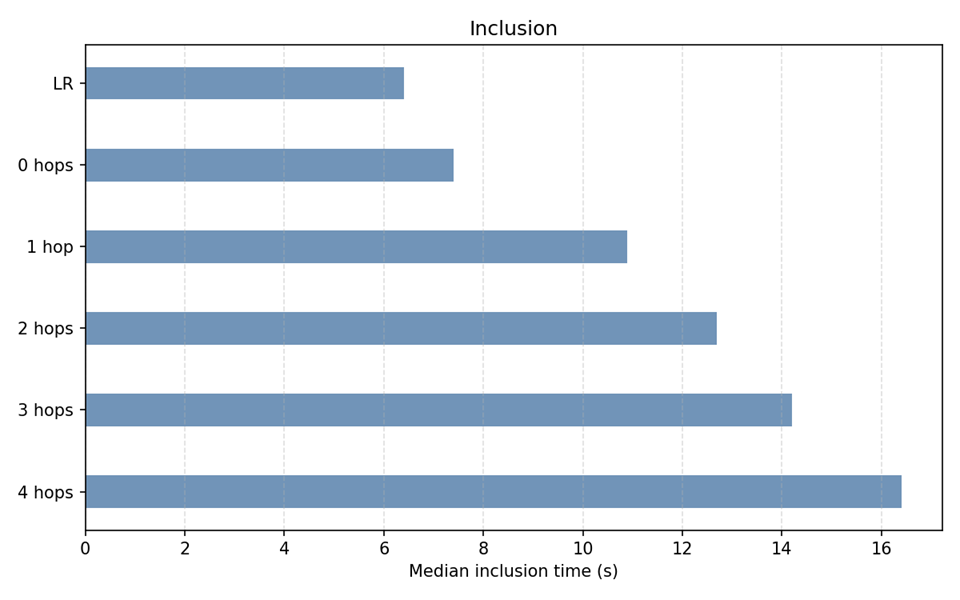
SmartStart inclusion time was measured in a conducted RF testing environment to ensure the controller used the intended routing paths during the process. Each scenario was executed 100 times using a Binary Switch device, and the median values are presented below.
This use case demonstrates the advantage of Z-Wave Long Range (LR), which performs better due to the absence of routing overhead and associated mechanisms such as Explorer Frames and neighbor discovery.